How to Extract Data from Google Maps ?
Updated 8/24/2026
One click to extract data from Google Maps for free.
Access detailed location data in seconds.
Google Maps holds information such as business names, phone numbers, websites, ratings, categories, and opening hours. The real question is how to extract data from Google Maps without losing a week to copying and pasting. This guide covers three different ways to do it.
The easiest way is the Online Google Maps Scraper. It runs in the cloud, so there's no extension to install and no code to write. You type a keyword with a location, and view or export the results. Developers who want the data inside their own system can use the Google Maps Scraper API instead, which returns JSON and fits into automated workflows. And if you already use our browser extension and like working inside Google Maps, that still works. Whichever route you take, learning how to extract data from Google Maps really comes down to matching the method to how you already work.
Start here: try the Google Maps Scraper free. No card, no install.
What Data Can You Extract from Google Maps?
More than most people expect. A single listing can give you:
- Business name
- Address
- Phone number
- Website
- Rating
- Review count
- Reviews
- Photos
- Business category
- Opening hours
- Place ID
- Latitude and longitude
- Email, when available
- Social media profiles, when available
Emails deserve a note, because it's the question we get most. Google Maps usually does not show emails directly. G Maps Extractor can help find emails from publicly available business websites and online sources when available. So you can get an email column, but expect gaps: it won't be filled in for every business. Social profiles work the same way. There's a full walkthrough in our guide on how to extract emails from Google Maps, and a separate one on extracting phone numbers.
Best Ways to Extract or Scrape Google Maps Data
There are four realistic ways to scrape data from Google Maps, and knowing how to extract data from Google Maps the right way usually just means matching one of these to your skill level and volume. Here is how they stack up:
| Method | Best for | Output | When to choose it |
|---|---|---|---|
| Online Scraper | No-code scraping, bulk searches, CSV/Excel export | CSV, Excel | Choose this if you want to extract Google Maps data without installing anything. |
| Google Maps Scraper API | Automation, SaaS, CRM, internal tools | JSON | Choose this if you need structured data inside your own system. |
| Browser Extension | Working directly inside Google Maps | CSV / Excel/JSON | Choose this if you prefer the existing browser workflow. |
| Manual copy | Very small one-time tasks | Manual spreadsheet | Only suitable for very small lists. |
Most people should start with the first row.
Method 1: Extract Google Maps Data with Online Scraper
This is the one we'd point almost anyone to first, and it is the fastest way to learn how to extract data from Google Maps if you have never scraped anything before. It's a Google Maps scraper online, which means the whole thing happens in a browser tab. Nothing to install. No code. The job runs on our servers rather than your laptop, so your machine isn't tied up while it works, and you can close the tab and come back to it.
The workflow:
- Open the Online Scraper and sign in with Google. New accounts come with free monthly credits, so you can test it before you pay anything.
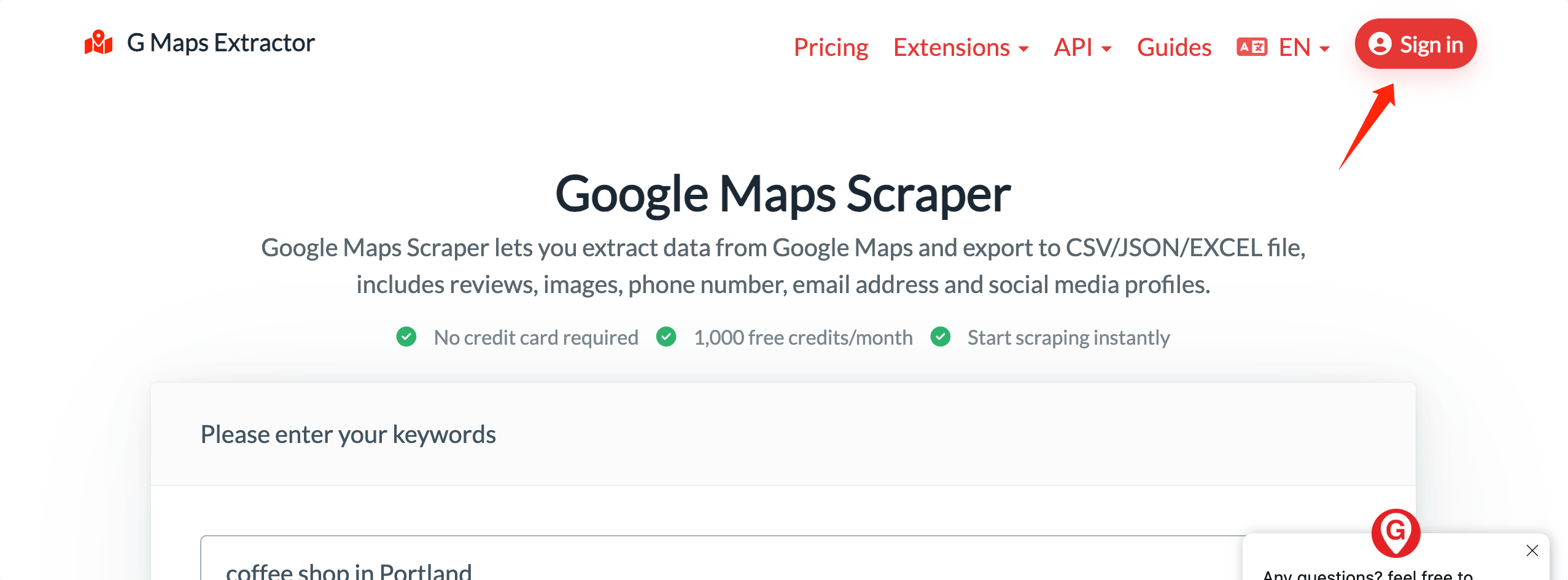
- Enter your keyword or category with the target location. Something like "dentist", "coffee shop", or "plumber".
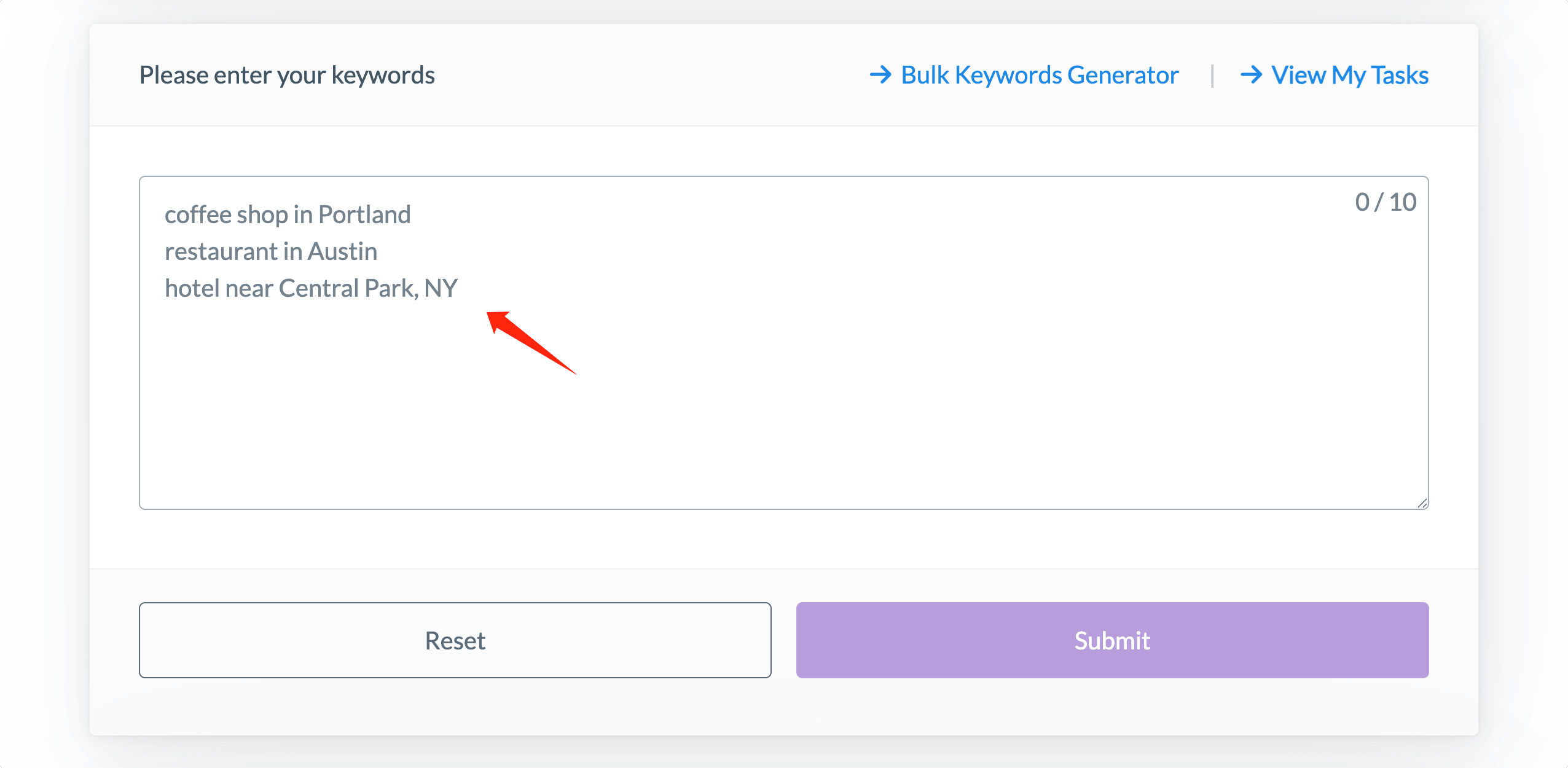
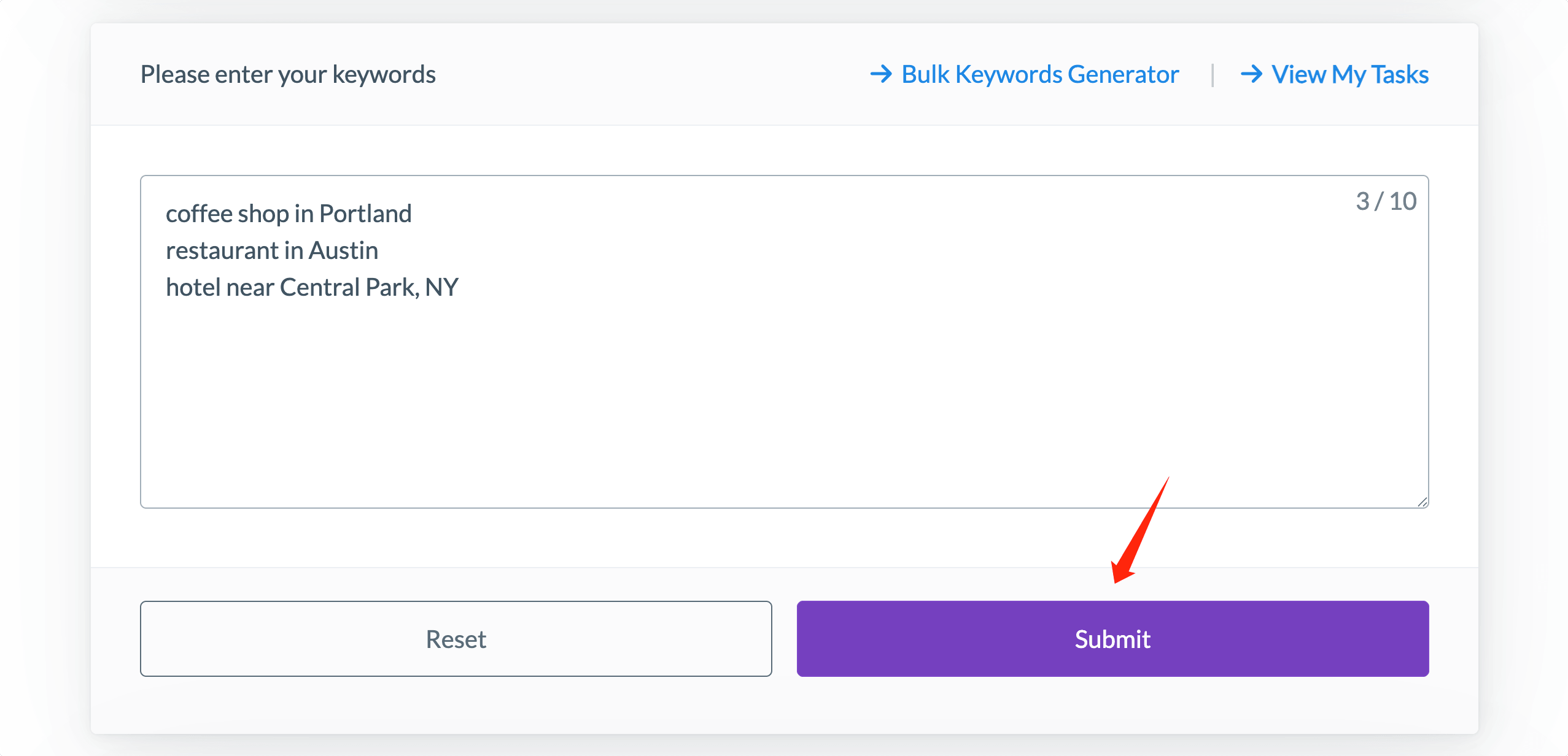
- Click submit. It processes in the cloud, and you can queue several keywords in one run instead of repeating the same search over and over.
- Preview the results. Check the listings look right before you commit to the full export.
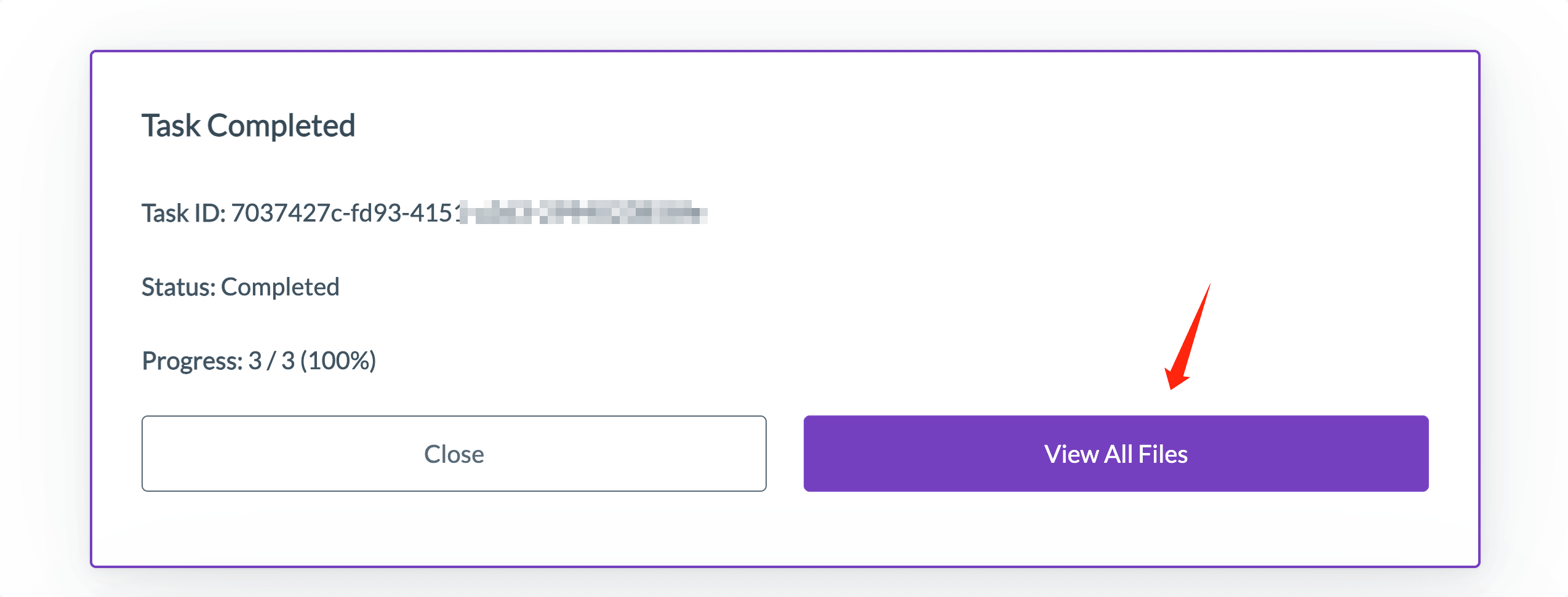
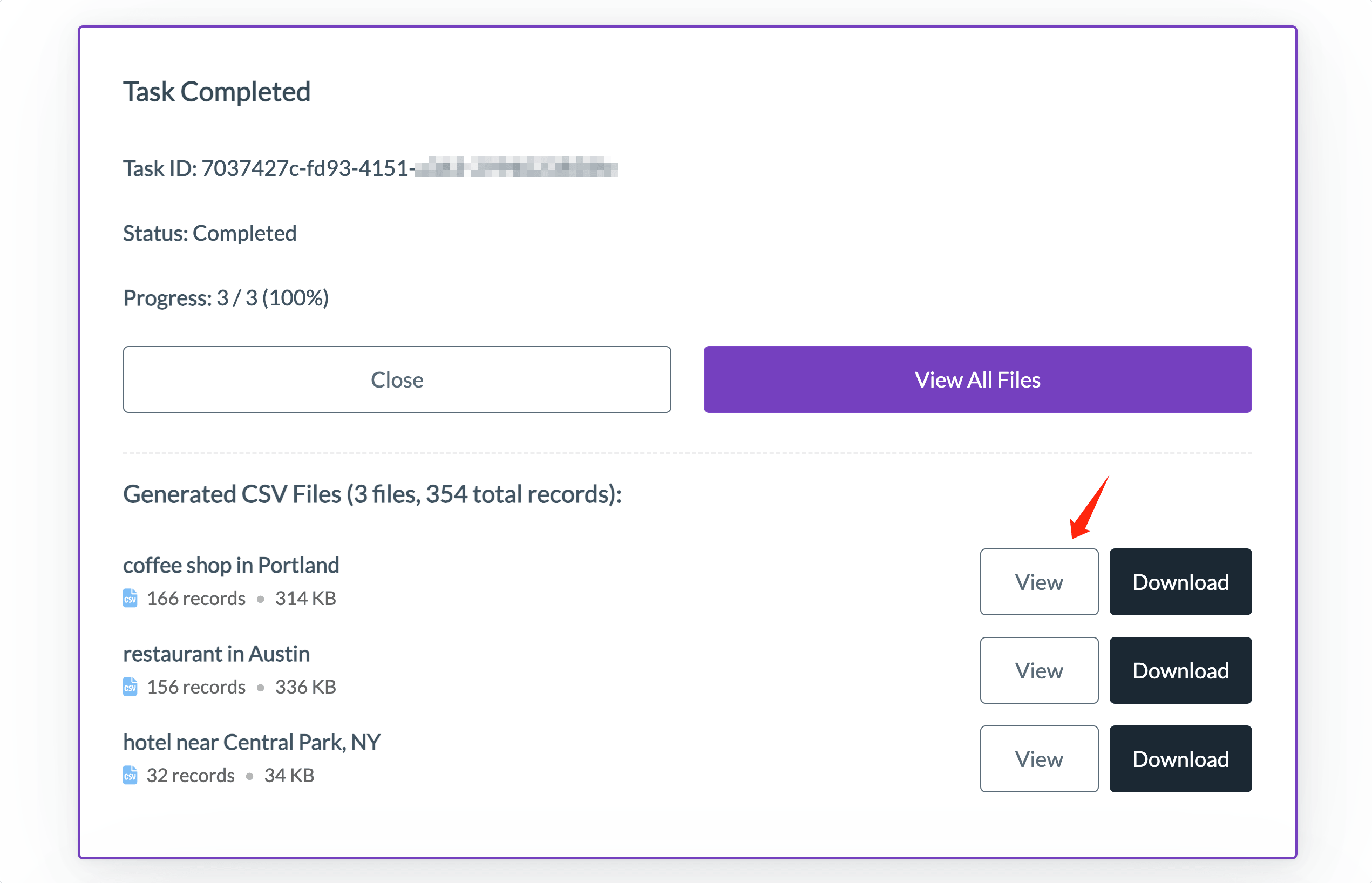
- You can either view the files or download them. The downloaded file will be saved in CSV format.
Here is the preview of the file:
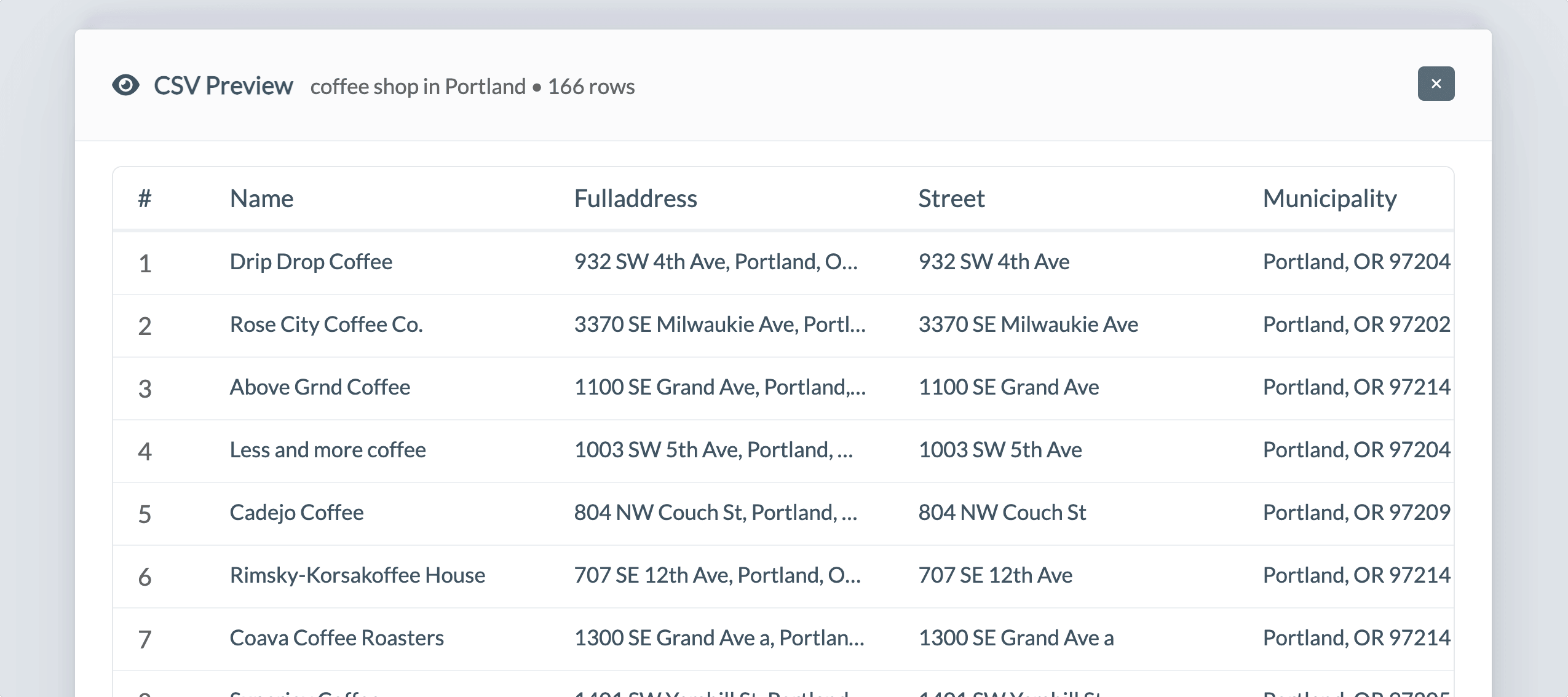
After that it's just a spreadsheet, and you can do what you like with it. Import it into a CRM. Hand it to a sales team as a call list. Build an outreach campaign. Or pull it into Excel for market research and local SEO work.
Who it suits: sales teams, marketers, agencies, and anyone who would rather not touch code. Bulk keyword searches are the real draw, since covering ten categories across a city by hand is where manual research falls apart. If you've never scraped anything before, start here. You can compare plans on the pricing page.
Method 2: Use Google Maps Scraper API for Automation
If you write code, the API is probably what you want, and it is the version of how to extract data from Google Maps that fits best into an existing pipeline. Instead of downloading a file, you call the API and get JSON back. That's the difference that matters: the data lands inside your system, not in your downloads folder.
It fits well when you need to:
- Collect data on a schedule, without anyone clicking a button
- Enrich CRM records as new leads arrive
- Feed a SaaS product or an internal tool
- Run lead generation at a larger scale
- Export Google Maps data to JSON for your own pipeline
There are also dedicated endpoints for the two data types people ask about most. The Google Maps Reviews Scraper API returns review content programmatically, and the Google Maps Photos Scraper API handles photos. If you'd rather see how those work without code first, we have guides on scraping Google Maps reviews and scraping Google Maps photos.
Check out this API documentation to integrate the Google Maps Scraper API within your applications.
Method 3: Use the Browser Extension
The browser extension is still here, and some people simply prefer it as their way of learning how to extract data from Google Maps without leaving the map itself. It works inside Google Maps: you search the way you normally would, and the extension pulls the results from the page you're already looking at.
It's a fair choice if you like seeing the map while you work, or if you're going through saved place lists. On bigger keyword jobs it's usually slower than the Online Scraper, because the work happens in your browser instead of the cloud. For a quick list off a search you're already running, it does the job nicely. You can install the extension here if that's your preference.
Common Use Cases for Google Maps Data
Once you know how to extract data from Google Maps, here is what teams actually do with it:
- Local lead generation. Build a list of businesses in one category and area.
- Sales prospecting. Give reps phone numbers and websites to work through.
- Local SEO agency research. Check how listings in a niche are set up.
- Competitor analysis. See who else operates in a market.
- Market research. Size up an area or a vertical before committing budget.
- CRM list building. Import structured records instead of typing them.
- Review monitoring. Track what customers say about a business over time.
- Local industry lead lists. Cover several categories in one region.
Which Method Should You Choose?
Short version:
| If you want this | Use this |
|---|---|
| CSV or Excel exports with nothing to install | Online Scraper |
| Data inside your own app, CRM, or JSON workflow | Google Maps Scraper API |
| Reviews or photos pulled programmatically | Reviews API or Photos API |
| To work directly inside Google Maps | Browser Extension |
However you weigh it, the short answer to how to extract data from Google Maps is to pick the method that matches the shape of your workflow, not the other way around.
FAQ
How do I extract data from Google Maps?
The short version of how to extract data from Google Maps is to use a no-code online scraper for CSV or Excel exports, a scraper API if you want JSON inside your own system, or a browser extension if you prefer working inside Google Maps directly. Google Maps lists business information publicly, and a Google Maps data extractor collects it into a structured file instead of you copying each listing by hand.
What data can I export?
Business name, address, phone number, website, rating, review count, reviews, photos, category, opening hours, Place ID, and coordinates. Emails and social profiles come through when they're publicly available.
Can I export Google Maps data to CSV?
Yes. The Online Scraper exports to CSV, and you can export Google Maps data to Excel just as easily. Open the file in any spreadsheet, or import it straight into a CRM.
Can I extract data without an extension?
Yes, and that's exactly what the Online Scraper is for. You can scrape Google Maps data online from a browser tab, nothing to install, nothing to set up. Sign in, search, export.
Is there a Google Maps Scraper API?
Yes. The Google Maps Scraper API returns JSON and is built for automation, CRM enrichment, and product integrations. There are separate Reviews and Photos endpoints too.
Can I extract emails from Google Maps?
Google Maps usually does not show emails directly. G Maps Extractor can help find emails from publicly available business websites and online sources when available, so an email column is possible, but it won't be complete for every business.
Conclusion
G Maps Extractor gives you three ways to extract Google Maps business data: the Online Scraper for no-code cloud scraping, the Google Maps Scraper API for automation and JSON workflows, and the Browser Extension for working directly inside Google Maps. Whichever you pick, that is really the whole answer to how to extract data from Google Maps: match the method to how you work, and remember you can use more than one. Plenty of teams run the Online Scraper for weekly lists and the API for anything automated.
Not sure where to start? Start with the Online Google Maps Scraper. It's free to try, and you'll know quickly whether the data fits your workflow. If you want to see the rest of what the tool does first, our guides walk through it step by step.
Start Online Google Maps Scraper Free | View Google Maps Scraper API